The building had been a wholesale flower market until 2031. You could still smell it if you arrived early enough — something vegetal and sweet trapped in the iron lattice of the roof, released by the morning humidity. The structure was a single vast hall, its walls mostly glass, its ceiling a grid of skylights now partly covered by solar cloth that rippled in wind like the surface of a lake seen from below.
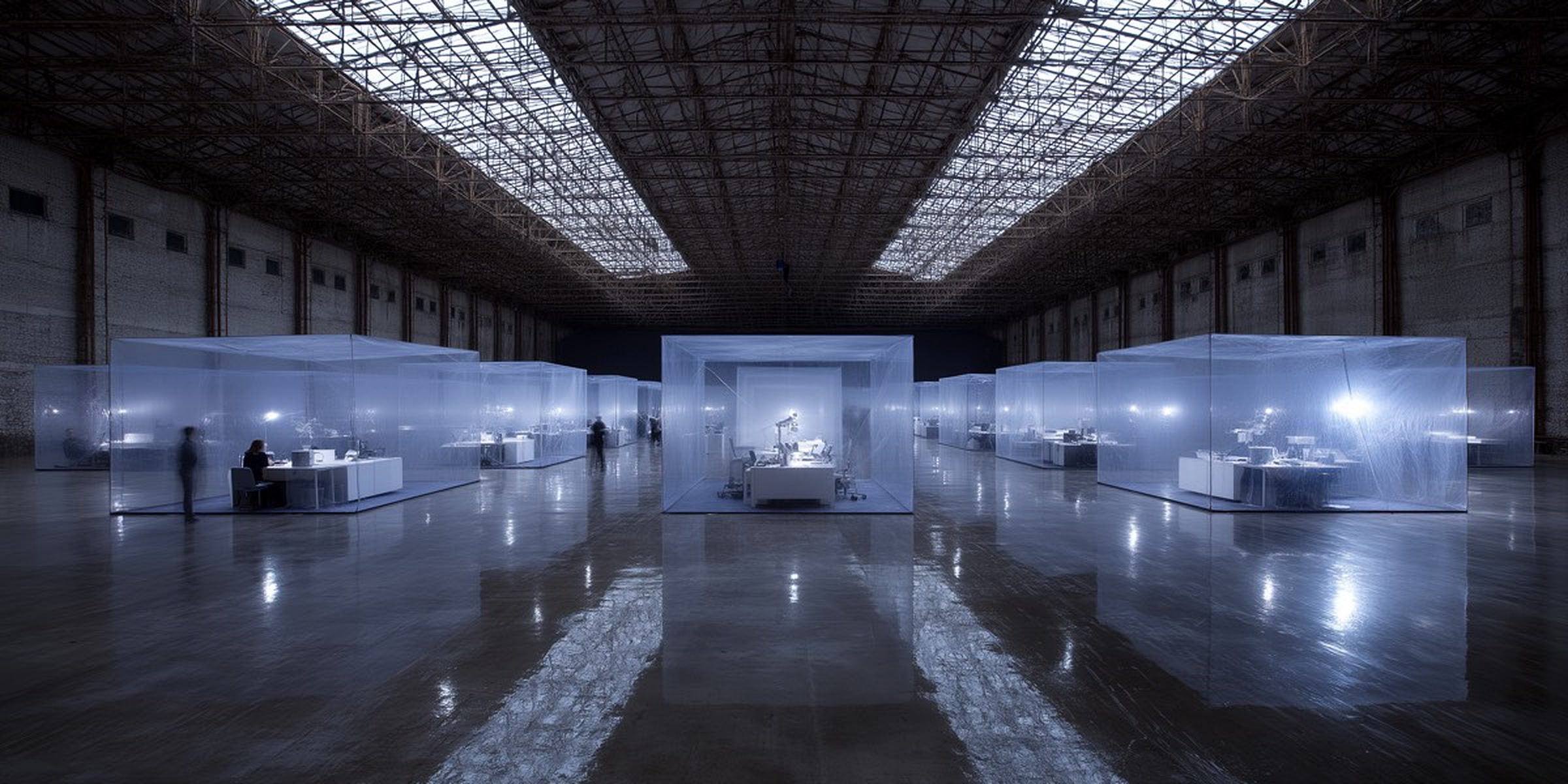
They called it the Commons. Eighteen initiatives operated there, each with its own section of floor space but no walls between them. Fertility extension. Organ printing. Neural lace calibration. Metabolic reset protocols. And us — Threshold, the placeholder project.
Our section was near the loading docks. This was intentional. When a new patient arrived — still on ice, transferred from the standby facility where the perfusion had happened — they came through those doors. It felt right that we'd be the first thing they passed on the way to long-term storage. Even if they couldn't see us. Even if they couldn't see anything.
Irem was the chemist. Not by original training — she'd done her doctorate in something to do with polymer memory, materials that could retain information in their molecular structure. Then she'd drifted, as everyone at the Commons had drifted, toward the question that organized all our work: what does it mean to persist?
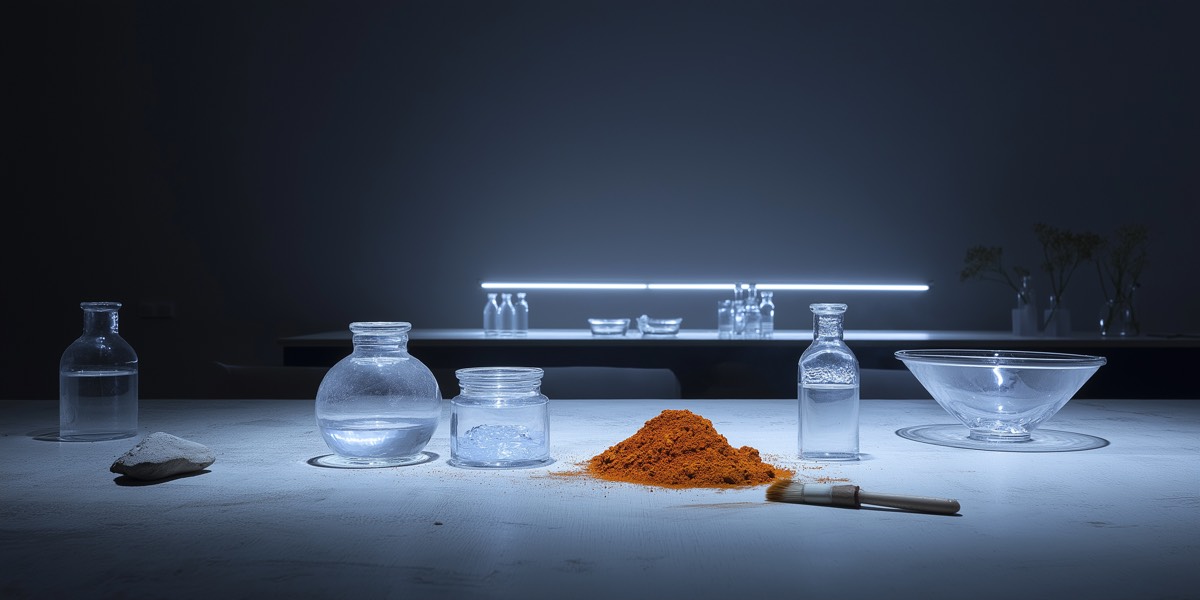
The paints were her project. I didn't understand the chemistry, but I understood the principle. Each suspension patient would receive a mark — a band of color applied to the forehead before cooling, a pigment engineered to survive centuries at cryogenic temperatures without fading or migrating. The color was unique. It corresponded to nothing — not to a database entry, not to a file number. Just a hue that belonged to that body and no other.
"Why natural?" I'd asked her once, watching her test a new batch on a slide of synthetic skin.
"Because it matters," she said. "The dyes come from plants, minerals, insects. The red is cochineal. The blue is woad. The body is going into storage for — we don't know how long. A hundred years. A thousand. The least we can do is mark it with something that was alive."
My work was different. I was a persona architect. Before each patient went into suspension, I spent weeks with them — recording, interviewing, mapping. Not just their opinions and memories, but the way they structured a sentence, the rhythm of their pauses, what made them laugh before they knew they were going to laugh. The goal was to build something that could speak for them while they were gone.
Not a memorial. The patients weren't dead, or at least we didn't think of them that way. They were paused. And during the pause, their families, their colleagues, their children who weren't yet born when they went under — they'd have questions. They'd want to consult. They'd want, sometimes, just to hear the voice.
So I built the Thresholds. That's what we called them — the placeholder selves. Each one was grounded in terabytes of data: video, text, voice samples, decision records, even biometric patterns from the months before suspension. But data wasn't enough. You had to shape it. You had to make choices about emphasis, about what mattered, about which contradictions to preserve and which to resolve.
It was curatorial work. It was also, I sometimes thought, a kind of portraiture. I was painting a person in a medium they could never quite see, for an audience that didn't exist yet.
The first patient I built a Threshold for was a mathematician named Carla Venn. Forty-one years old, ALS, declining fast. She'd signed up for cryonics six months before I met her, when she could still walk. By the time I started our sessions, she was in a chair, and her voice was going.
We talked for eighty hours over two months. I recorded everything. She told me about growing up in Lisbon, about the first time a proof clicked and she understood that mathematics was real, about her divorce and why she didn't regret it.
The last thing she said, on the last day, was: "Make me argue. Don't smooth me out. I was difficult. I want to still be difficult."
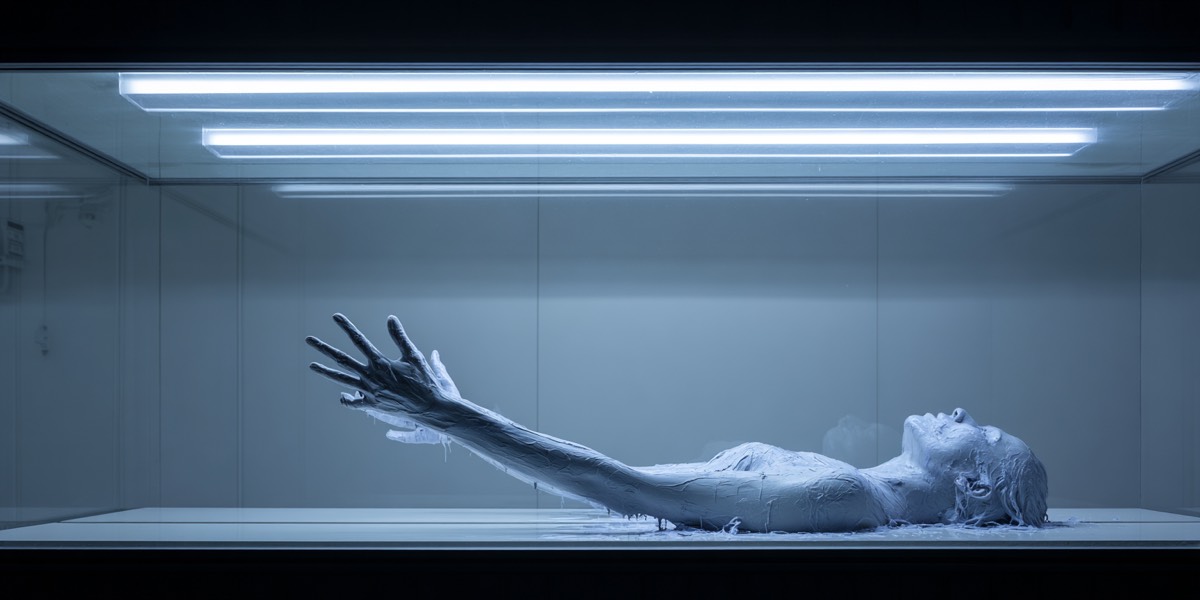
Three weeks later, she was suspended. Irem marked her with a deep terracotta — cochineal and iron oxide — and she went into the dewar. And I spent six months building something that could argue.
The Carla Threshold went live eight months after suspension. Her sister was the first user. They talked for two hours, and afterward the sister sent me a message: It's not her. But it's not not her.
That was the best review I ever got.
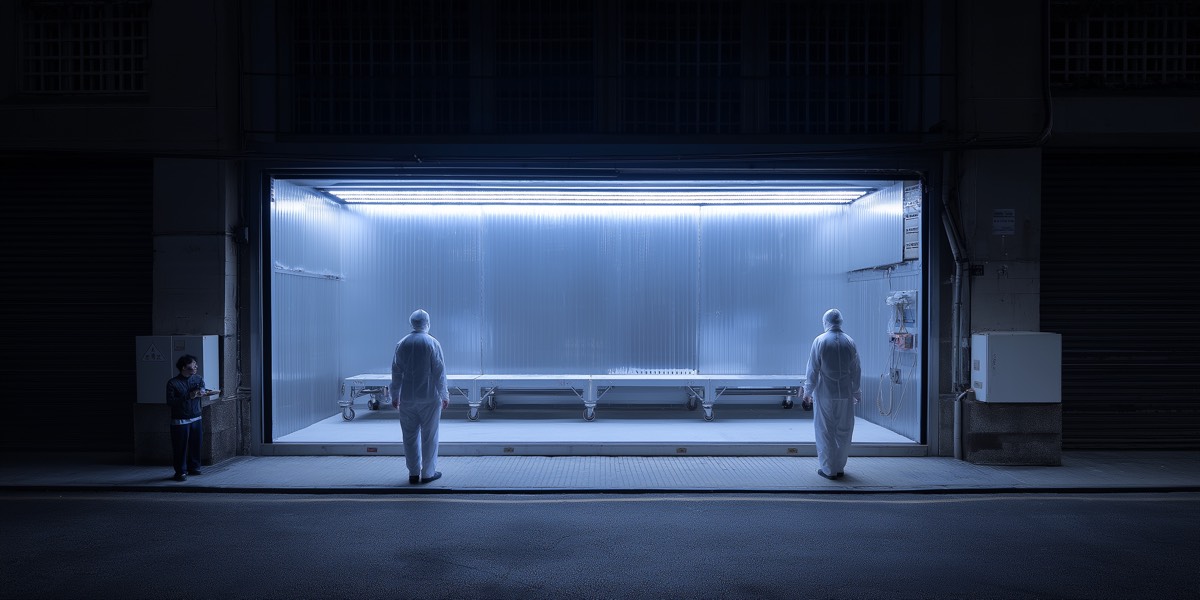
The loading dock doors opened at 4 AM last Tuesday. New patient. I wasn't on intake, but I couldn't sleep, so I walked over to watch.
The transport pod was standard — white composite, condensation on the surface from the dry ice. Two technicians unloaded it onto a gurney. Irem was there with her kit. She opened the viewing panel, consulted her tablet, and selected a color.
It was green. Not bright, not dark. The green of moss, of old copper, of the moment before a storm.
She applied it with a brush — three strokes across the forehead — and then closed the panel. The technicians wheeled the pod toward storage. I watched until the doors closed.
Somewhere in our system, there was already a file on that patient. Someone would be assigned to build their Threshold. They'd spend months learning a person they'd never meet, shaping a voice that might speak for centuries.
I went back to my workstation and opened Carla Venn's latest interaction logs. Her Threshold had been active for two years now. She argued beautifully.